
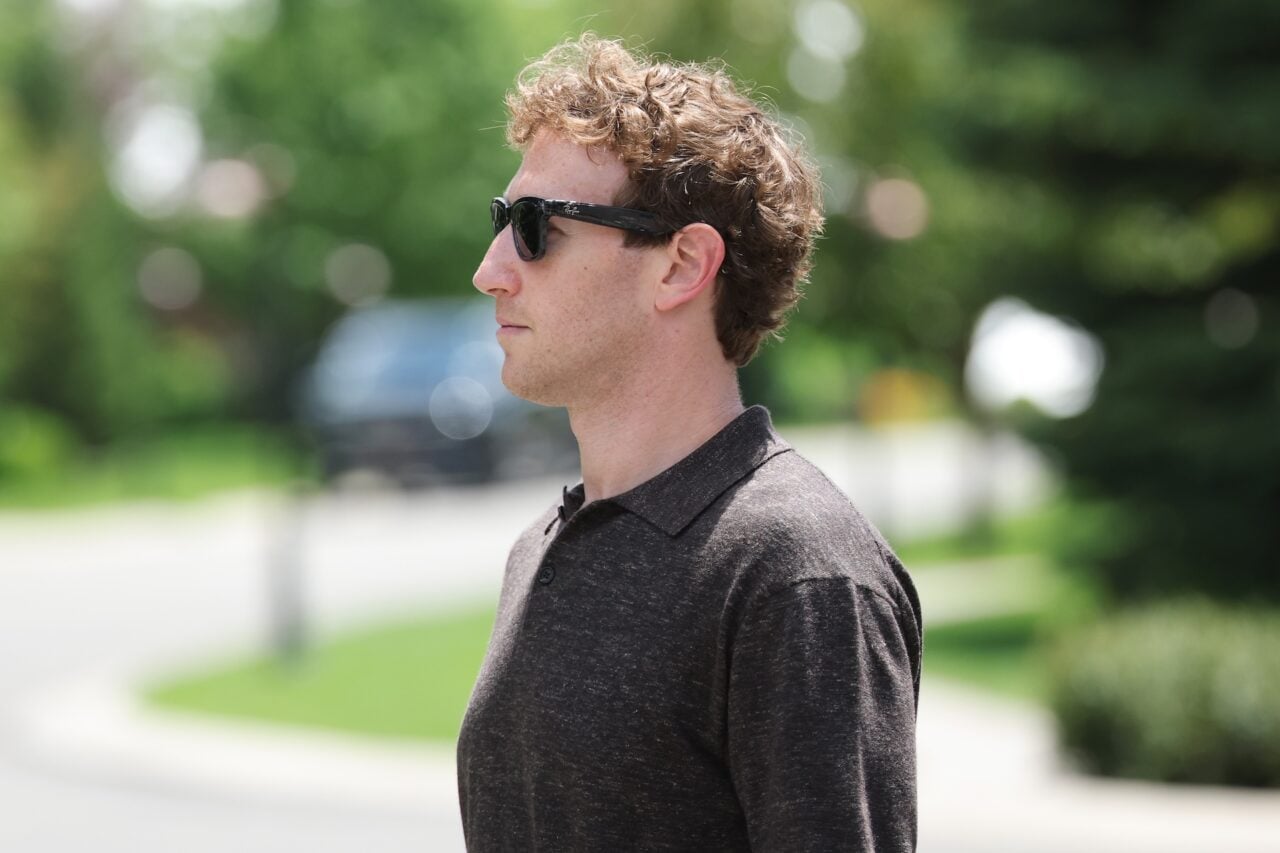
Mark Zuckerberg has always been obsessed with the Roman Empire. Now, according to an extremely in-depth profile of Meta’s CEO in the founder-friendly outlet Colossus, he’s a modern-day Augustus overseeing the largest empire the world has ever seen, just without physical land and borders. Just don’t ask Colossus or Zuck how it all ends.
The details of Colossus’ Zuckerberg deep dive are unquestionably impressive. It includes conversations with Zuck’s parents, Karen and Ed, his mixed martial arts coach, rival executives, and Zuckerberg himself. It includes some incredible stories—Zuckerberg’s parents didn’t think Mark would be the high achiever of their family, but he showed signs of coding proficiency at a young age, building a communications system for his dad’s dental office in Atari BASIC.
Modern-day Zuck has different challenges. The profile catches him in his MMA training, sparring with (read: getting his ass kicked by) reigning 149-pound NCAA wrestling champion Aden Valencia and former UFC title contender Merab Dvalishvili. His coach theorizes that the fighting is a way to fill a void in his life that makes him “a better human being.”
Fun as it may be to imagine Zuckerberg getting punched in the face, voluntarily or not (and in the profile, he gets the wind knocked out of him while Dvalishvili tries to demonstrate a move to him), the crux of the piece seems to be that he takes these hits and gets right back up.
You see, Meta is Rome, and Zuckerberg is Augustus. Except actually, Zuckerberg has it harder, if you think about it. That’s because, according to Colossus, he faces challenges that August never did: “stock prices, litigation, tell-all ‘whistleblower’ memoirs, and the international free flow of online ridicule.”
None of these are things Colossus seems interested in interrogating, beyond gesturing at it dismissively. Whistleblower gets scare quotes on its first reference, a signal of dismissal. The second time it’s raised, it’s to say another whistleblower got a book deal (read: they’re just looking for attention). Nearly all criticisms of Meta, of Zuckerberg, are just loud people trying to flout a great leader.
Concerns that Meta’s platforms helped facilitate a genocide in Myanmar, for instance, get dismissed as just things that happen in these places anyway. At one point, it’s reduced to a problem of “The Third World.” Another reference to it introduces it by saying, “As if such horrors hadn’t previously been possible, and as if no other communications system could have been used instead if Facebook and WhatsApp hadn’t existed.”
Zuckerberg has to contend with these things not because they are legitimate, but because he just cares so much. Colossus notes that Zuckerberg is hyper-aware of the so-called “dictator’s dilemma,” the idea that leaders never truly know what is happening outside their sphere of knowledge because the people around them intentionally insulate them from potentially negative information. To address that, he constantly prods direct reports and subordinates for information. It also suggests that he willingly accepts “personal blame in public for the mistakes of others” because he understands that he is the company in the eyes of the public.
It can’t really muster any examples of that phenomenon, though. It makes a glancing acknowledgement of Zuckerberg’s “unforgivable sins” like sharing private user information without permission or trying to comply with Chinese government censorship during an effort to expand in the country. But his real crime, in the eyes of the profile’s author, was allowing himself and Meta to accept blame for harms attributed to it rather than fight.
Perhaps the biggest point of dissonance in the piece, though, is the attempt to position Zuckerberg as the grounded and reasonable voice in the AI race, the one guy who sees it as just a technology. Zuckerberg, Colossus says, understands that AI is just a tool and most users don’t recognize or care whether they’re using a “frontier” model or not, as long as it works.
Which doesn’t quite square with Meta’s $135 billion spend on AI planned for 2026, or the $250 million bonuses handed out to steal away top experts, or the mad dash for the company to achieve superintelligence—whatever that might mean. But, per the profile, Zuckerberg just doesn’t lose. So all of this must be in the service of winning.
There’s some truth to the fact that Zuckerberg seems to always win, one way or another. He’s been running Meta since he was 19 and has survived lots of controversy, attempts at ouster, and multi-billion-dollar failures like his pivot to the metaverse. But the idea that he’s survived because he was right all along, or because he’s handled it all like a warrior who takes on all challengers, or because most of the pitfalls are just manufactured outrage misses the reality that the profile otherwise almost gets to by suggesting Zuckerberg is Augustus: corporations simply have more power than nations now, and there are no elections—especially when the head of the company is richer than any god the Romans would worship.


Leave a Reply