
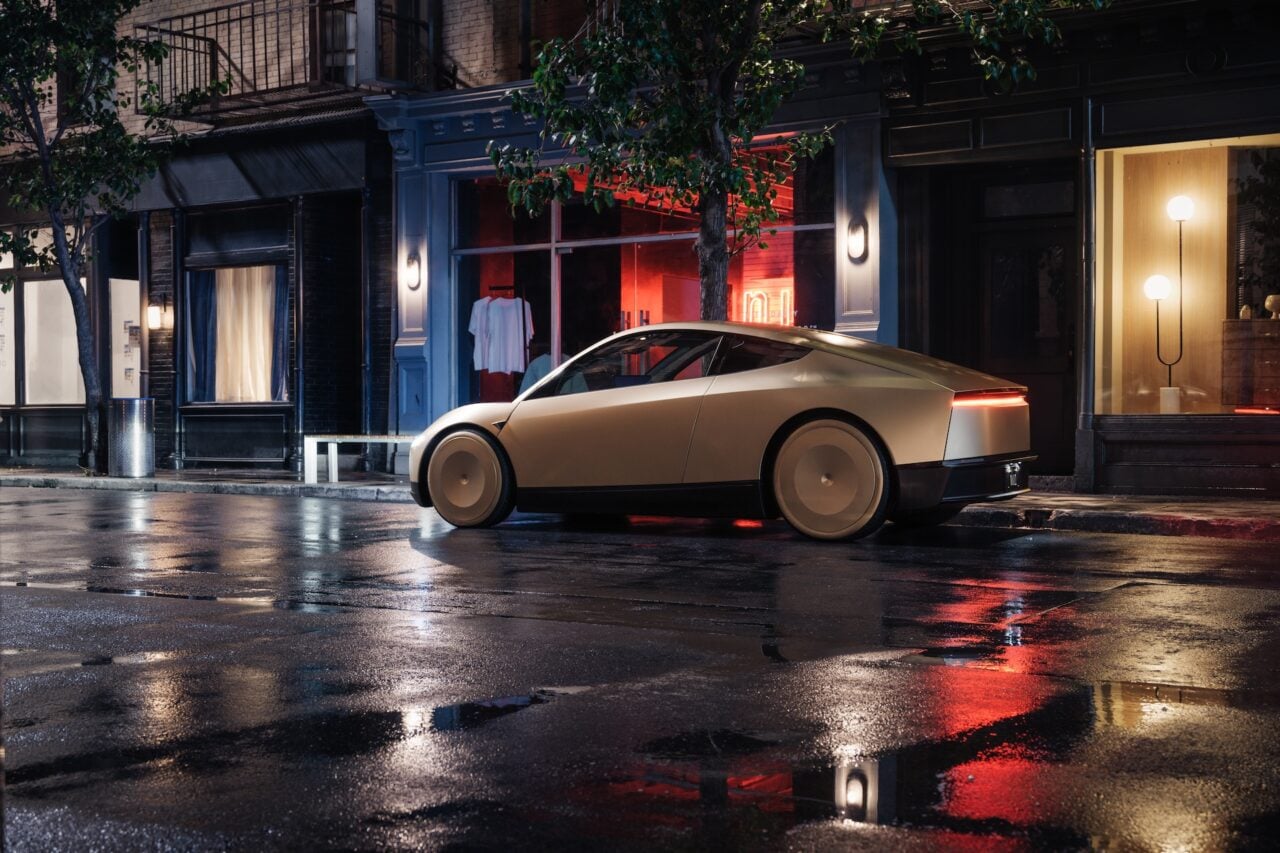
Just hours after rolling onto Austin roads, Tesla’s Cybercab ran into its first speed bump.
The National Highway Traffic Safety Administration (NHTSA) opened a probe Thursday examining “the process and technical data on which Tesla relied when certifying the Cybercab and related issues.”
A summary of the probe says Tesla notified the agency that it had certified a small number of Cybercab vehicles which began operating commercially in Austin on Thursday as compliant with all applicable Federal Motor Vehicle Safety Standards (FMVSS).
It also notes that the Cybercab lacks traditional controls like pedals and a steering wheel. The issue is that some federal safety rules require equipment the vehicle doesn’t have, including a brake pedal and rearview mirrors.
Cybercab is democratizing clean transportation for all pic.twitter.com/Raz5dy2Q3Z
— Tesla (@Tesla) September 3, 2026
Now, NHTSA is looking into how much of Tesla’s certification depended on the company determining that certain standards don’t apply to the robotaxi.
“NHTSA fully supports the safe development and deployment of automated vehicles. But as the federal regulator, we need to ensure that all of our laws are followed,” said NHTSA Administrator Jonathan Morrison in a press release. “Our approach of balancing innovation with safety oversight will allow the United States to maintain its global leadership in AV innovation.”
Amazon’s Zoox, a robotaxi that also doesn’t have traditional driving controls, ran into similar issues. In 2025, however, it received a demonstration exemption from some safety standards. And this July, the NHTSA granted Zoox a temporary exemption allowing it to deploy up to 2,500 robotaxis annually for two years. Morrison said at the time that “Zoox demonstrated that their vehicle design has an equivalent level of safety as a vehicle that meets all FMVSS.”
The agency has also proposed updating its safety standards, specifically around brake pedals, for vehicles designed to be driven exclusively through an automated driving system.
For now, though, NHTSA is looking into whether Tesla was right to determine that some of those standards don’t apply to the Cybercab.
The probe was opened the same day Tesla held a rocky launch event for the Cybercab. The EV company sent out invites for its big day late last month. But in the days leading up to it, many Tesla fanboys took to social media to complain they had received no information about the event’s time and location.
The future has arrived in Austin pic.twitter.com/RTCb0O5sez
— Tesla (@Tesla) September 3, 2026
Finally, on Sept. 2, just a day before the event, a Tesla engineer posted that it would take place at 4:45 p.m. in downtown Austin.
A video posted by the YouTube channel Out of Spec BITS showed the inside of the event, which featured several models of the vehicle and a presentation by Tesla engineers that lasted less than 15 minutes. Surprisingly, CEO Elon Musk was completely missing.
The biggest news from the event was that Tesla’s broader Robotaxi fleet had surpassed 1 million miles of unsupervised driving and that a small fleet of Cybercabs was being deployed this week in Austin.
Tesla’s website now also includes a form for people interested in buying a fleet of Cybercabs.
There’s still no word on when, or if, the vehicle will be available for individual consumers.
Musk has repeatedly said individuals would be able to buy a Cybercab and add it to Tesla’s network so it could be used as a robotaxi when they aren’t using it.
Tesla did not immediately respond to a request for comment.
Cybercab is designed to be a great experience for every rider pic.twitter.com/wG0jrvJ6pX
— Tesla (@Tesla) September 3, 2026


Leave a Reply