
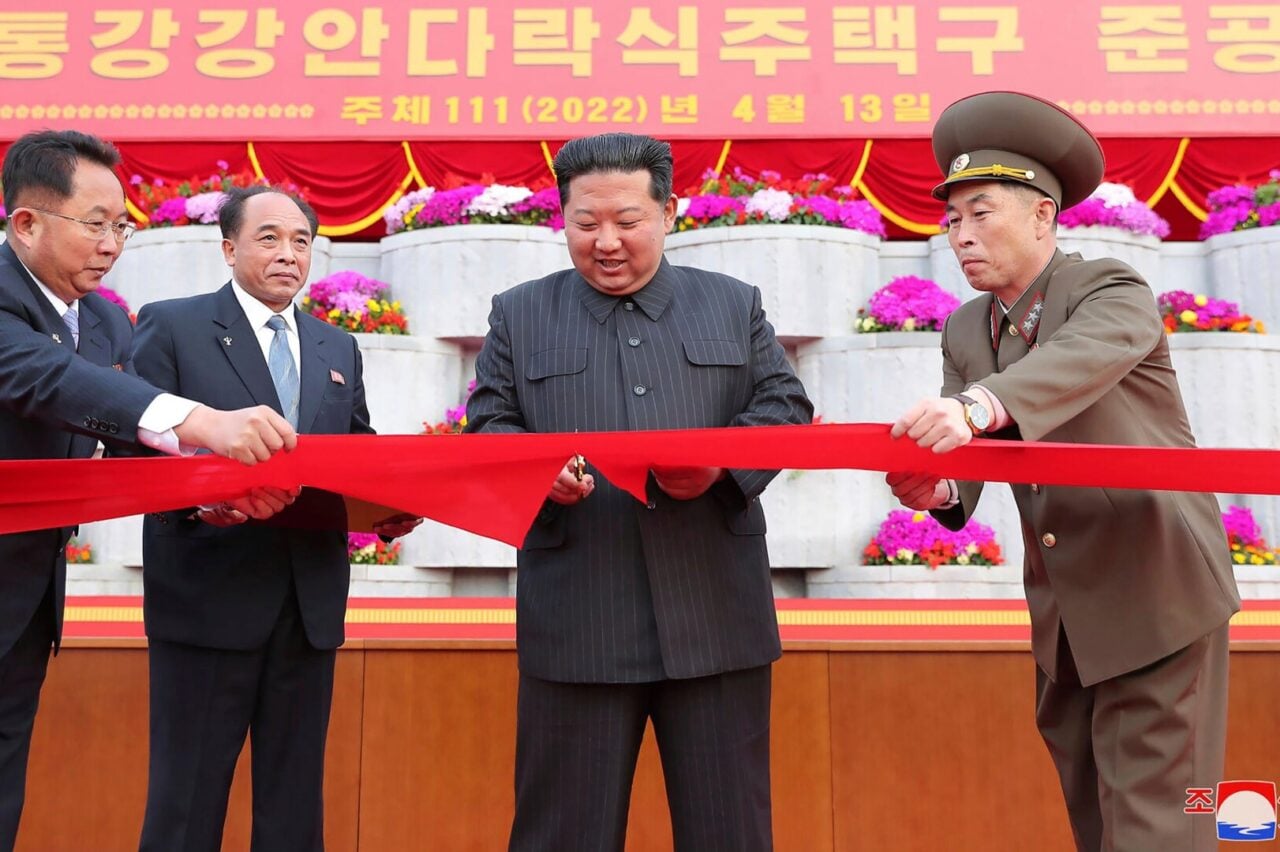
A spokesperson for North Korea’s foreign ministry has responded to the deluge of accusations related to crypto thefts and crimes thrown at Kim Jong Un’s regime, according to North Korea’s state news outlet KCNA.
In a rare statement on the matter, the state-sponsored news organization referred to the alleged cyber threat coming out of North Korea as “non-existent” and claimed, “It is our consistent policy stand to protect cyber space.” KCNA also referred to those accusing North Korea of committing crypto crimes as “U.S. government organs, reptile media organs and plot-breeding organizations.”
This appears to be the first time North Korea has issued a direct public denial of crypto-related accusations through official state channels.
A large number of cyber crimes involving the theft of crypto assets, particularly from exchanges based in South Korea, have been tied back to North Korea by blockchain analytics firms, law enforcement agencies, and other authorities around the world. In fact, these alleged crypto crimes are now viewed as a key profit-making mechanism for the North Korean regime as a whole, and a U.S. Treasury official previously claimed that these illicit gains have been used to fund the country’s nuclear weapons program.
A report by blockchain analysis firm TRM Labs released at the end of April detailed the scale of North Korea’s more recent crypto crime operations. According to the report, North Korean agents accounted for 76% of all crypto funds stolen in 2026 through April, a haul worth $577 million that came from just two sophisticated attacks. The firm estimates North Korea has earned more than $6 billion from crypto thefts since 2017, and its annual share of global crypto thefts has risen steadily over the years. “North Korea’s elite hacking teams run a small number of high-precision attacks against large infrastructure targets rather than a high volume of smaller exploits,” the report claimed.
One of those attacks allegedly hit the Drift Protocol earlier this year. The operation is said to have stretched over six months and relied on social engineering. Individuals posing as representatives of a quantitative trading firm approached Drift contributors at a crypto conference in fall 2025. They built relationships through in-person meetings in multiple countries, created a Telegram group to discuss trading strategies, and even onboarded their own vault with more than $1 million in deposits. Attackers later used a known vulnerability in code repository tools and a TestFlight app disguised as a wallet product, draining roughly $285 million in approximately 12 minutes.
The second attack struck Kelp DAO last month and netted about $292 million worth of crypto. The incident eventually created a public relations problem for the wider crypto sector, as layer-two Ethereum blockchain Arbitrum’s Security Council used emergency powers to transfer stolen ether from attacker addresses to a governance-controlled wallet, effectively freezing roughly $75 million. Observers noted this reliance on centralized intervention contradicted crypto’s original “code is law” ethos. Similar centralized fixes were seen last year after an Office Space-style exploit drained $120 million across multiple blockchains.
April also saw 29 major crypto hacking incidents, which is now the highest monthly total on record.
Crypto appeals to U.S. adversaries such as North Korea because it operates beyond the traditional financial system that the United States largely controls through sanctions and banking rails. Iran has embraced the use of crypto for similar reasons. Its central bank acquired $507 million in Tether’s USDT stablecoin to stabilize the Iranian rial after the currency fell 43% against the dollar in a year, and it also previously monetized surplus energy by directing it toward bitcoin mining, according to blockchain analysis firm Elliptic. More recently, the regime has reportedly favored bitcoin over stablecoins (at least for toll payments in the Strait of Hormuz), as stablecoin issuer Tether recently froze hundreds of millions of dollars in USDT tied to Iranian activity.
Proponents of this technology have long argued that bitcoin could serve as the foundation for a more decentralized global monetary system that is less dependent on the U.S. The United States itself has taken steps that reflect this possibility, with President Trump signing an executive order in March 2025 creating a strategic bitcoin reserve built from assets seized in law enforcement actions. Several states, such as New Hampshire and Texas, have also moved ahead on their own, passing laws establishing state-level bitcoin reserves. These developments, combined with adoption by Iran and North Korea, can be viewed as an illustration of the often-made claim that “bitcoin is for enemies,” as both the United States and its most ardent adversaries have shown interest in the asset (at least for now).
READ MORE: Trump-Linked World Liberty Financial Accuses ‘Victimized’ Crypto Billionaire of Defamation


Leave a Reply